Decolonizing Building Methods as Climate Mitigation and Land Reclamation
A little over a year ago, I learned that the coquí, a symbol of my parents' homeland, was endangered. That single fact opened a door I couldn't close. It led me to the coral bleaching in Culebra, the history of displacement that feels ancestral to so many Boricuas, and the environmental racism embedded in our own neighborhoods. From the lead-filled JMZ line in Bushwick to the contaminated water I grew up around in Atlantic City, I saw how injustice takes root where people live.
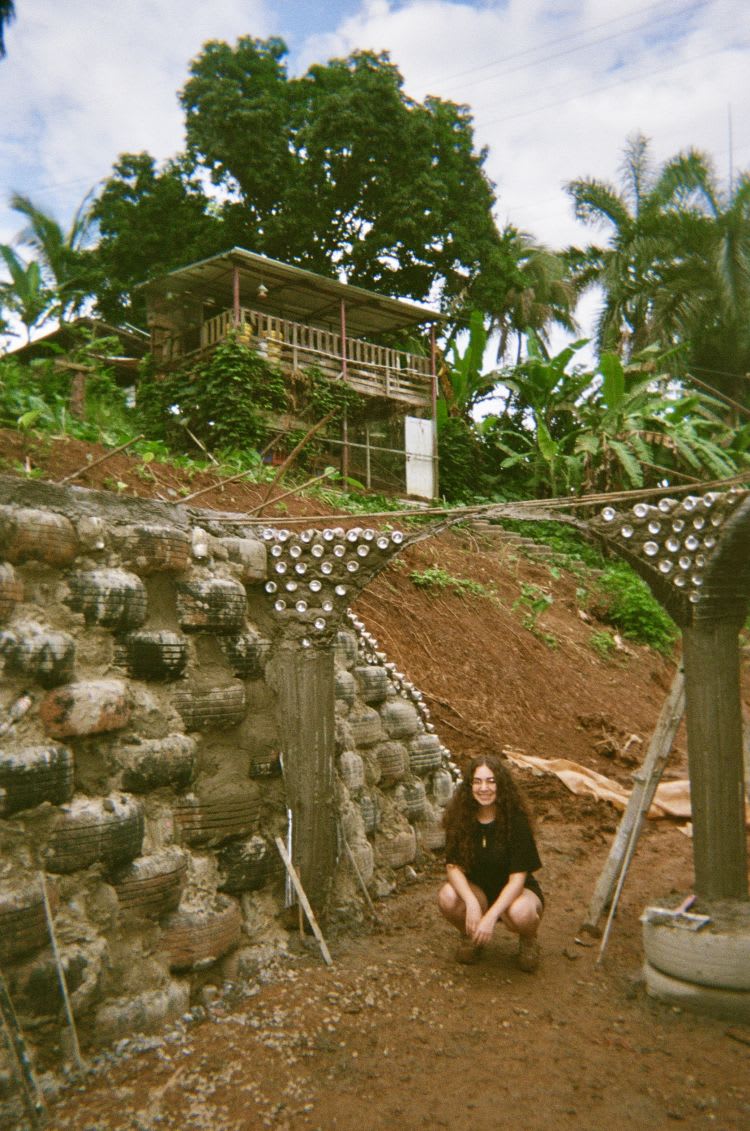
This journey of learning has been a journey of action. I've poured my heart into community composting in Brooklyn, learning about circularity and soil. I've worked alongside Indigenous farmers and urban environmentalists. And in 2025, I traveled to Aguada, Puerto Rico, to help build Earthship community kitchens for hurricane relief. There I learned that the most sustainable solutions are the ones a community defines for itself.
The Fellowship:
Today, I am honored to announce that I am a 2026 CEEJH Climate Fellow.
This highly competitive fellowship is the next step in turning my passion into a concrete, actionable plan. Over the next nine months, I will receive structured training and mentorship to develop a community-led project that addresses climate justice. My goal is to weave together everything I have learned, from the soil in Brooklyn to the Earthships in Aguada, to build initiatives that not only mitigate climate disasters but also foster equitable power and health for the frontline communities I come from.
The Project:
The question driving my research was presented to me by my fellowship advisor. What role does concrete play within the context of colonialism? And more importantly, could construction using natural materials serve as a strategy for climate change adaptation and mitigation in Puerto Rico?
The numbers are stark. According to the Global Climate Risk Index, between 2000 and 2019, Puerto Rico was the country most severely affected by extreme weather events. And yet, according to the Yale School of the Environment, Puerto Ricans rank among those most concerned about climate change. This concern is paired with a deep displacement. We know that Indigenous populations protect over 80 percent of the world's biodiversity. If Puerto Rico is the country most affected by climate change, and Puerto Ricans are among those most concerned about it, why do we not identify as Indigenous? What has been lost, and what is waiting to be reclaimed?
I am exploring these questions through my literature review, drawing on sources about natural material construction projects already emerging across Latin America. These projects offer a path forward, one that challenges the idea of concrete as inevitable progress and instead asks what it would mean to build like we belong to the land.
Thank you for being part of this journey.
Images:
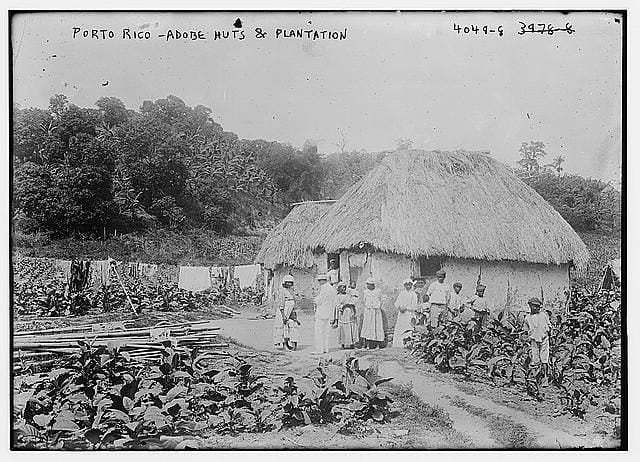
1. Adobe huts on farms in Puerto Rico, 1920. (Library of Congress, George Grantham Bain Collection) – A glimpse of ancestral building methods that sustained communities before concrete became the standard.
2. A sea turtle off the coast of Culebra, Puerto Rico, 2025. – A reminder of the vibrant life that depends on healthy coastlines.

3. Bleached coral reef off the coast of Culebra, Puerto Rico, 2025. – The visible reality of warming waters and the urgency of climate action.

4. A friend repairing the roof of the community kitchen in Aguada, Puerto Rico, 2025. – Mutual aid and hands-on resilience in action.

5. Me inside the unfinished community kitchen in Aguada, Puerto Rico, 2025. – My own commitment to building with and for community.